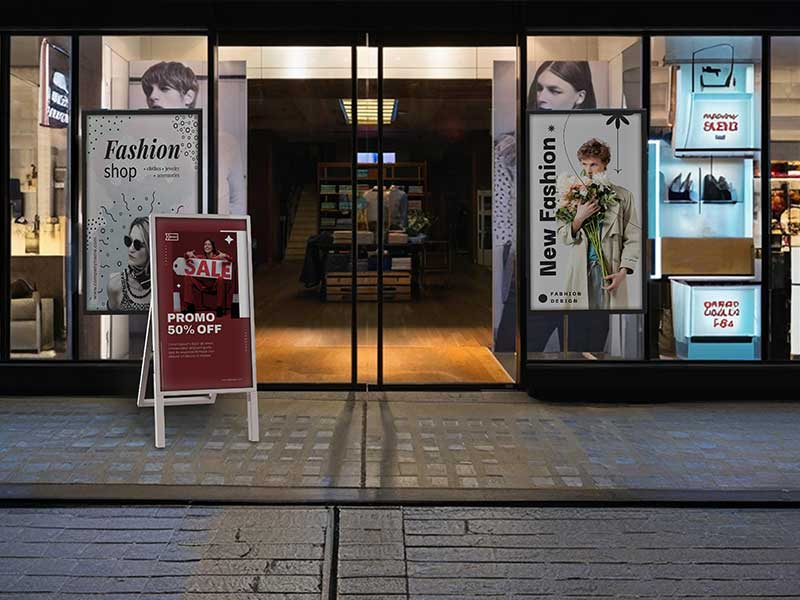
As reflective display technologies continue to evolve, cholesteric liquid crystal (ChLCD) ePaper has gained recognition for its bistability, low power consumption, and full-color reflective capabilities. However, traditional bistable cholesteric liquid crystal displays still face inherent limitations, particularly in pressure resistance and viewing-angle color shift. To overcome these challenges, super-stable cholesteric liquid crystal display technology has emerged as an advanced evolution of ChLCD, offering improved mechanical robustness and optical stability while preserving the core advantages of ePaper.
What Is Super-Stable Cholesteric Liquid Crystal Display Technology?
Super-stable cholesteric liquid crystal technology is a multi-stable reflective display approach derived from conventional cholesteric liquid crystal systems. Like standard ChLCD, it relies on the helical molecular structure of cholesteric liquid crystals and operates without a backlight, using ambient light to render images. However, the key difference lies in how the molecular domains and interfaces are engineered.
While traditional bistable ChLCD depends primarily on the pure geometric orientation of cholesteric liquid crystal domains, super-stable ChLCD introduces material system optimization and advanced process control to rebalance the energy distribution between liquid crystal domains and their interfaces. This shift fundamentally changes how the display responds to external forces and viewing angles.
How Super-Stable ChLCD Differs from Conventional Bistable ChLCD
The display principle of super-stable ChLCD remains largely consistent with that of standard cholesteric liquid crystal displays. Under different applied voltages, liquid crystal molecules switch between reflective and transmissive states, selectively reflecting specific wavelengths of light. Once a state is set, it remains stable without continuous power input.
The critical distinction is that super-stable ChLCD does not rely solely on domain geometry to maintain these states. Instead, it carefully balances the system energy between crystal domains and interfacial regions, creating a more resilient molecular configuration. This balance reduces sensitivity to mechanical deformation and minimizes optical instability caused by external pressure or uneven stress.
As a result, super-stable ChLCD displays maintain consistent visual performance even when subjected to physical contact or prolonged environmental stress.
Why Pressure Resistance Matters in ePaper Applications
One of the most significant improvements offered by super-stable cholesteric liquid crystal technology is its enhanced pressure resistance. In traditional bistable ChLCD panels, external pressure can disturb the alignment of liquid crystal domains, leading to image distortion, color non-uniformity, or permanent artifacts.
Super-stable ChLCD addresses this limitation by strengthening the internal energy equilibrium of the liquid crystal system. This makes the display far more tolerant of compression, vibration, and handling forces. For large-format displays and public installations—such as billboards, information boards, and commercial signage—this mechanical stability is critical to ensuring long-term reliability.
How Super-Stable ChLCD Eliminates Viewing-Angle Color Shift
Another key limitation of conventional cholesteric liquid crystal displays is angle-dependent color shift. Because traditional ChLCD relies on the geometric orientation of liquid crystal helices, reflected wavelengths can change with viewing angle, causing visible color deviation.
Super-stable ChLCD significantly mitigates this issue. By optimizing the material composition and controlling the interaction between domains, the display maintains a consistent color appearance across a wide range of viewing angles. This improvement is especially important for large displays viewed from multiple directions, where uniform color perception directly impacts readability and visual quality.
The absence of angle-related color shift makes super-stable ChLCD more suitable for professional and commercial applications compared to earlier cholesteric implementations.
Energy Efficiency and Visual Comfort Advantages
Like other cholesteric liquid crystal ePaper technologies, super-stable ChLCD remains reflective and multi-stable. It does not require a backlight and consumes power only during image updates. Once an image is displayed, it can be maintained without additional energy input.
This characteristic delivers multiple benefits:
- Ultra-low power consumption, ideal for always-on displays
- Visual comfort, with no flicker and no emitted blue light
- Excellent visibility under strong ambient lighting, including indoor and semi-outdoor environments
These properties align closely with the core philosophy of ePaper: providing a paper-like viewing experience while enabling digital content updates.
How Super-Stable ChLCD Fits into the ePaper Technology Ecosystem
Super-stable cholesteric liquid crystal technology does not replace traditional ChLCD but rather represents its mature evolution. Compared with electrophoretic ePaper (microcapsule or microcup), super-stable ChLCD offers native full-color capability and improved mechanical durability. Compared with emissive displays such as LCD or LED, it dramatically reduces energy consumption and eliminates backlight-related eye strain.
Within the broader ePaper landscape, super-stable ChLCD is particularly well suited for large-area color displays where long-term image stability, uniform color, and structural robustness are essential.
Application Scenarios for Super-Stable ChLCD Displays
Thanks to its enhanced pressure resistance and angle-independent color performance, super-stable ChLCD is ideal for applications such as:
- Commercial and retail ePaper billboards
- Public information displays
- Transportation and wayfinding signage
- Large indoor advertising panels
In these scenarios, displays must remain visually consistent despite frequent human interaction, environmental variation, and extended operating lifetimes.
SEEKINK and Advanced Electrophoretic ePaper Solutions
Despite its strengths in low-power reflective operation, ChLCD ePaper may face constraints in contrast ratio, color depth, and refresh adaptability, whereas Electrophoretic display offers a more mature and versatile solution across a wider range of applications. SEEKINK continues to advance the practical adoption of next-generation electrophoretic ePaper technologies, translating complex display innovations into reliable e-ink commercial solution.
