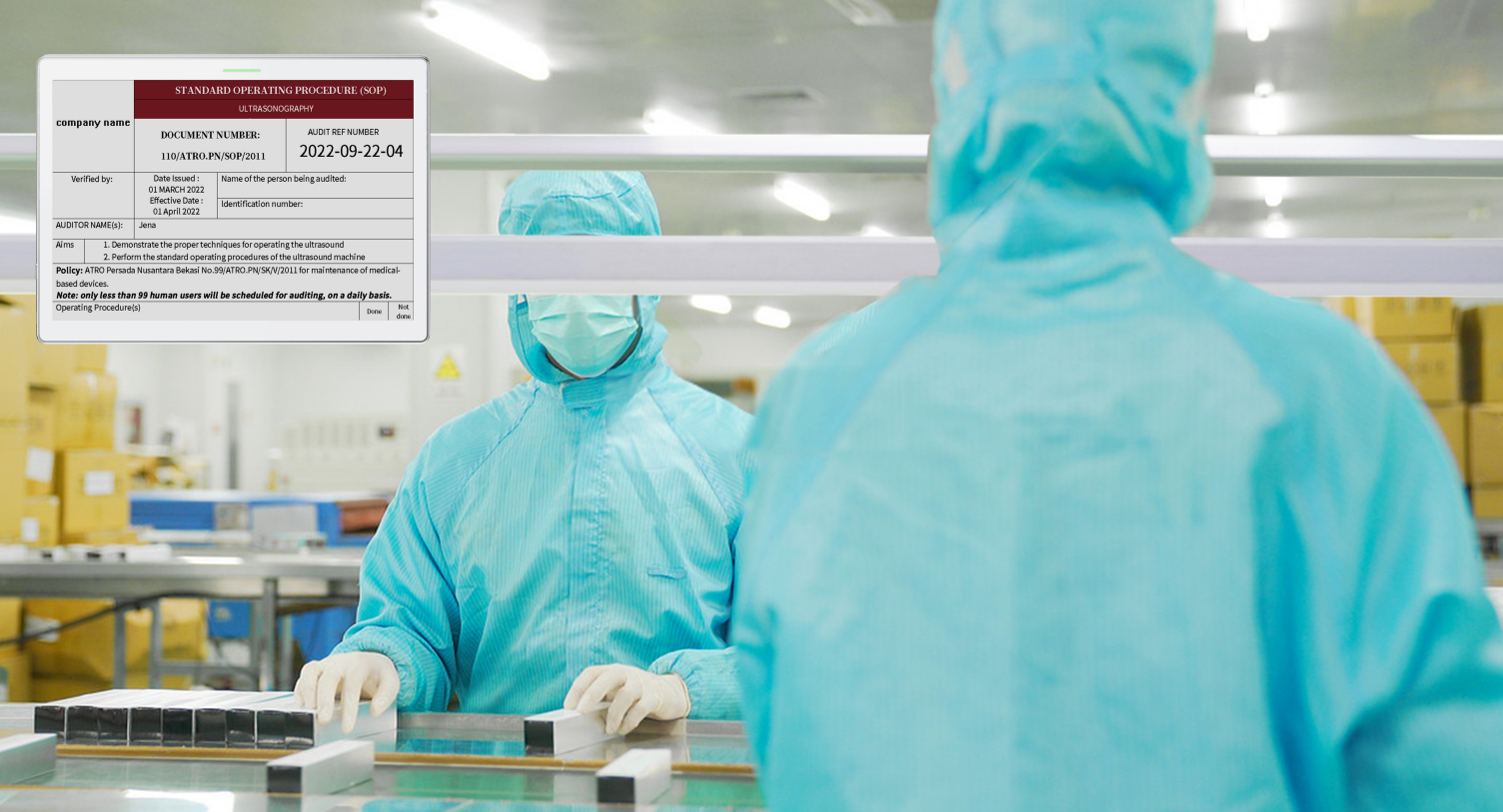
As digital transformation accelerates across manufacturing and heavy industry, smart industrial systems are entering a new stage of large-scale and high-quality development. Beyond established ePaper applications such as retail electronic shelf labels, e-readers, and handwriting tablets, deep integration with the industrial internet is emerging as one of the most promising growth directions for the ePaper industry. With its ultra-low power consumption, wireless connectivity, and excellent outdoor visibility, ePaper is increasingly positioned as a critical human–machine interface in smart industrial environments.
The Rise of the Industrial Internet and New Display Demands
The industrial internet has become a core driver of industrial upgrading and productivity enhancement. In 2023, China made significant progress in this field, accelerating the intelligent transformation of traditional industries while enabling the rapid growth of new industrial models. Entering 2024, the pace of high-quality development and large-scale deployment of industrial internet applications has further increased. According to data released by the Ministry of Industry and Information Technology, the core industrial internet sector reached a market size of approximately RMB 1.53 trillion in 2024.
As industrial internet infrastructure continues to mature, integration scenarios are expanding from equipment connectivity to production management, logistics coordination, and workforce optimization. In this context, the demand for reliable, flexible, and energy-efficient display solutions is growing rapidly. Unlike consumer electronics, industrial environments often require displays that can operate for years with minimal maintenance, remain readable under strong lighting, and function without complex wiring. These requirements align closely with the inherent strengths of ePaper technology.
Human–Machine Interaction in Smart Factories
Despite the rise of fully automated “dark factories,” most intelligent manufacturing systems still depend heavily on human participation. Operators, inspectors, logistics staff, and maintenance teams remain essential to daily operations. As a result, various forms of paper-based information—work orders, process instructions, labels, and signage—are still widely used on factory floors.
One of the key application directions for ePaper in smart industry is enabling “process digitalization” and “paperless production.” By replacing traditional paper with ePaper displays, factories can digitize workflows while retaining the familiarity and clarity of paper-based information. Compared with LCD screens, ePaper displays offer clear advantages in industrial settings: they require no continuous power supply, do not need complex cabling, and can operate for years on a single built-in battery. This makes them ideal for retrofitting existing factories without disrupting operations.
Diverse Application Forms in Industrial Environments
ePaper products for smart industry come in a wide range of forms. Many solutions are based on electronic shelf label architectures and are directly integrated with factory information systems. Typical applications include picking labels, shelf labels, turnover box labels, information display boards, and digital work instructions. These displays can be updated wirelessly in real time, ensuring that operators always have access to the latest production data and instructions.
Because of their flexibility and reliability, nearly all major manufacturers have already deployed products in industrial scenarios. ePaper-based industrial signage helps reduce manual errors, improve response speed, and enhance overall production efficiency. In environments where dust, vibration, and temperature fluctuations are common, the durability and low maintenance requirements of ePaper provide additional operational advantages.
Combining ePaper with Positioning and Data Systems
Another important innovation direction is the integration of ePaper with ultra-wideband (UWB) indoor positioning technology. By combining centimeter-level positioning with ePaper displays, UWB-enabled ePaper tags can be used to track workers, mobile pallets, and autonomous carts in real time. These smart tags enable precise location management across production lines and warehouses.
When connected to industrial internet platforms and manufacturing execution systems, location data can be analyzed alongside production data to continuously optimize workflows, reduce bottlenecks, and improve resource allocation. In this scenario, ePaper serves not only as a display medium but also as a data interface, bridging physical operations and digital management systems.
Advantages of ePaper for Industrial Internet Applications
Several technical characteristics make ePaper particularly suitable for smart industrial use. Ultra-low power consumption allows devices to operate for years without battery replacement, reducing maintenance costs. Wireless networking and, in some cases, wireless power solutions simplify deployment in large or complex facilities. High contrast and glare-free visibility ensure that information remains readable under strong lighting or outdoor conditions.
Most importantly, ePaper supports a scalable and sustainable approach to industrial digitization. By minimizing energy consumption and reducing paper waste, it aligns with broader goals of green manufacturing and low-carbon industrial development. As factories increasingly focus on efficiency, safety, and sustainability, ePaper-based interfaces are expected to become standard components of industrial internet systems.
SEEKINK’s Role in Smart Industrial ePaper Solutions
SEEKINK is a technology-driven company specializing in ePaper display solutions across retail, office, transportation, and industrial sectors. With a strong focus on system-level integration and real-world application scenarios, SEEKINK develops ePaper products designed to meet the demanding requirements of industrial environments.
