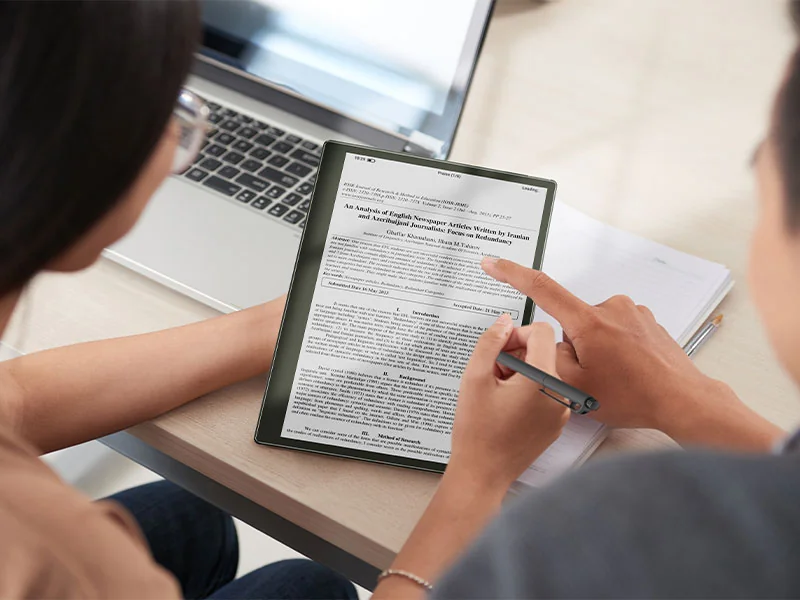
Electrophoretic ePaper technology has made significant strides in recent years, bringing innovative solutions to various industries with its unique benefits. Two major structures used in electrophoretic ePaper displays are microcapsule and microcup technologies. Both structures employ the principle of electrophoresis to drive charged particles, creating the displayed images. However, they differ in their design, color reproduction capabilities, and ideal applications. In this article, we will explore the differences between these two technologies and their respective advantages.
Microcapsule Electrophoretic ePaper: Fast Refresh and Stability
Microcapsule-based electrophoretic ePaper is one of the most commonly used display technologies. In this design, the microcapsules contain two types of charged particles: black and white. These particles move in response to an electric field, allowing for the creation of static black and white images. One of the primary advantages of the microcapsule technology is its fast refresh rate. For example, it can achieve a refresh speed of up to 125ms for a full image, even at room temperature in a two-level grayscale mode.
The stability of microcapsule ePaper is another critical advantage. The technology has a wide operational temperature range, capable of functioning from -15°C to 65°C, making it ideal for environments that require a robust display, such as outdoor signage or solar-powered public transportation systems. Additionally, microcapsule ePaper displays are highly durable, making them suitable for a variety of commercial applications, such as electronic price tags, logistics labels, and solar-powered bus stop signs.
When combined with color filters or layers, microcapsule-based displays can produce a wide range of color effects, typically up to 4096 colors, although the primary focus remains on black and white. This technology is often used in applications requiring fast image refresh rates and low power consumption.
Microcup Electrophoretic ePaper: Vibrant Colors and Enhanced Saturation
While microcapsule displays are ideal for simple black-and-white applications, microcup-based ePaper technology is used for color displays. In this design, the display panel is composed of individual microscopic cups, each filled with charged particles that are evenly distributed. These microcups are sealed after being filled with particles of different colors. By applying an electric field, the charged particles within the microcups move to create colorful displays.
The significant advantage of microcup ePaper is its ability to achieve higher color saturation and broader color gamuts compared to microcapsule displays. With the ability to produce three-, four-, or even full-color displays, microcup displays provide more vibrant and rich colors, which are ideal for applications where color accuracy is critical, such as digital signage, smart billboards, and advertising displays.
Another advantage of the microcup technology is its structural integrity. Since each microcup is a uniform size, the consistency in particle distribution ensures that the color display is uniform across the screen. The design also reduces the risk of color cross-talk between adjacent cells, improving the quality of the color reproduction. Furthermore, the mechanical stability of microcup displays is higher than that of microcapsule-based displays, making them suitable for use in environments that demand both durability and superior color performance.
Key Differences in Structure and Application
Display Speed and Stability: Microcapsule displays are known for their fast refresh rate and excellent stability in various environmental conditions. This makes them ideal for applications requiring fast updates, such as logistics tracking, price tags, and outdoor signage.
Color Capabilities: Microcup-based displays excel in color reproduction, offering a wider color gamut and higher color saturation. These displays are better suited for applications requiring vivid and accurate color representation, such as advertising and public displays.
Structural Integrity: Microcup displays have a more consistent structure, which results in better mechanical strength and structural stability compared to microcapsule displays. This makes them ideal for products that require high durability and long-term use.
Temperature Range: Microcapsule displays have a wider temperature tolerance, capable of operating in more extreme conditions, making them suitable for outdoor and solar-powered applications.
Applications of Microcapsule and Microcup ePaper Technology
Microcapsule ePaper is commonly used in products where black-and-white readability and low power consumption are essential, including eReaders, digital price tags, outdoor digital signage, and logistics labels.
Microcup ePaper is ideal for color displays and is used in applications where vivid color reproduction is required, such as electronic shelf labels, advertising displays, smart billboards, and interactive signage.
SEEKINK’s Contribution to ePaper Technology
SEEKINK is a leading innovator in the field of ePaper technology. One of our notable products, the H103NPL E Ink Android Tablet, demonstrates the versatility and efficiency of ePaper in various applications. Featuring an 10.3″ large high-resolution display and wacom 4096-level pressure sensitivity, this reader is an ideal choice for those looking for a low-power, durable, and environmentally-friendly display solution.
