Electrochromic ePaper has emerged as a distinctive and highly promising solution. With its flexible structure, extremely low driving voltage, and bistable color-changing capability, electrochromic ePaper opens new possibilities for transparent displays, segment-based information panels, and energy-efficient smart signage.
What Is Electrochromic ePaper and How Is It Structured?
Electrochromic ePaper is fundamentally different from particle-based ePaper technologies. It is built on a flexible, roll-to-roll printable multilayer structure, typically consisting of a top substrate layer, an electrochromic layer, an electrolyte layer, electrode layers, and a bottom substrate layer. This laminated architecture allows electrochromic ePaper to be thin, lightweight, and mechanically flexible.
The core working principle of electrochromic ePaper lies in the reversible change of optical properties—such as reflectance, transmittance, and absorption—under an applied electric field. Visually, this manifests as a controllable and reversible change in color and transparency. Unlike displays that rely on particle movement or liquid crystal alignment, electrochromic displays depend on electrochemical reactions within the material layers.
How Electrochromic Color Change Works
At the heart of electrochromic ePaper is the interaction between the electrochromic layer, the electrolyte layer, and the electrodes. When a low voltage—typically around 1 volt, and in some cases as low as 0.3 volts—is applied across the device, electrons move through the electrode layers while microscopic ions within the electrolyte migrate toward or away from the electrochromic layer.
This ion movement triggers reversible oxidation–reduction reactions in the electrochromic material, altering its molecular structure and therefore its optical behavior. As a result, the display changes color or transparency. When the voltage is removed, the electrochromic layer remains in its current optical state, demonstrating a strong bistable characteristic.
Because the ions involved are extremely small—on the atomic scale—the energy required to drive this process is minimal, making electrochromic ePaper one of the lowest-power display technologies available.
Color Capability and Full-Color Potential
Through continuous optimization of electrochromic materials, modern electrochromic ePaper can achieve primary color switching by applying different voltage levels. By combining red, green, and blue electrochromic responses, full-color display effects become possible.
This color-generation mechanism differs from both RGB color filters used in electrophoretic ePaper and stacked liquid crystal layers used in cholesteric displays. Instead, color is produced intrinsically within the electrochromic material itself. This allows for transparent or semi-transparent display effects, which are difficult or impossible to achieve with conventional ePaper technologies.
Why Electrochromic ePaper Excels in Power Efficiency
One of the most compelling advantages of electrochromic ePaper is its exceptionally low power consumption. Because the display only requires power during color transitions, and not to maintain the displayed state, energy usage is drastically reduced. After each color change, the image can remain stable for several days without power.
By applying intermittent low-voltage pulses, long-term color retention can be achieved with minimal energy input. This makes electrochromic ePaper particularly well suited for battery-powered or energy-harvesting systems, including solar-assisted devices.
Compared with segment-based electrophoretic ePaper displays, electrochromic solutions operate at significantly lower voltages—often below 1.5V—resulting in even lower overall system power consumption.
Durability, Longevity, and Environmental Adaptability
Advancements in material formulation, device structure, and manufacturing processes have significantly improved the reliability of electrochromic ePaper. Modern electrochromic devices can achieve switching lifetimes exceeding one million cycles, making them suitable for long-term commercial use.
The flexible substrate and roll-to-roll manufacturing process allow electrochromic ePaper to operate across a wide temperature range, typically from –20°C to 60°C. This environmental tolerance, combined with mechanical flexibility, enables deployment in diverse indoor and semi-outdoor scenarios.
Additionally, electrochromic ePaper does not emit blue light and does not require backlighting, contributing to visual comfort and eye safety—important considerations for displays used in offices, public spaces, and healthcare environments.
Key Application Scenarios for Electrochromic ePaper
Today, electrochromic technology is most widely recognized for its role in smart color-changing glass, where transparency and shading are dynamically controlled. However, its application in display technologies is rapidly expanding.
Electrochromic ePaper is already finding practical use in high-end anti-counterfeiting and security displays, digital certificates and authentication panels, segment-based numeric and symbolic displays and transparent and semi-transparent information nameplates.
Compared with LCD-based segment displays, electrochromic ePaper offers superior flexibility, customization, and cost efficiency—particularly for low-information-density applications that prioritize design freedom and ultra-low power consumption.
SEEKINK and Practical Electrophoretic ePaper Solutions
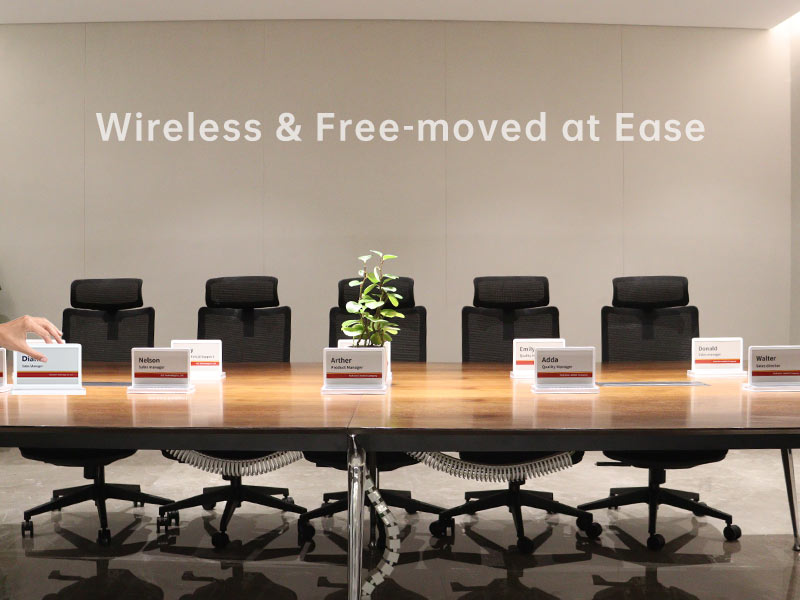
While electrochromic ePaper offers clear advantages in segmented and design-focused applications, Electrophoretic display remains the more versatile and widely adopted solution for content-rich, scalable ePaper displays. SEEKINK integrates advanced ePaper technologies into practical, commercially viable products. T075E5HD 4-Color e-Ink Nameplate with PV, which demonstrates how ultra-low-power, color-capable ePaper can be applied to smart office and identification scenarios. By combining energy-efficient display technology with thoughtful system design, SEEKINK delivers ePaper solutions that balance sustainability, reliability, and modern aesthetics—helping organizations transition from traditional printed materials to intelligent, low-carbon digital displays.
