In the ever-evolving world of display technologies, microcavity ePaper stands out as a cutting-edge development in the electrophoretic display domain. Unlike traditional microcapsule or microcup electrophoretic technologies, microcavity ePaper offers a unique structure that significantly enhances display performance in terms of contrast, clarity, and refresh rates. In this article, we explore the principles behind microcavity ePaper technology, its features, and the significant advantages it offers across various applications.
The Principle of Microcavity ePaper
Microcavity ePaper technology is based on a bistable electrophoretic display mechanism, similar to that of traditional electrophoretic displays. However, the major difference lies in its unique structure. Rather than using encapsulated microcapsules or microcups, microcavity ePaper features a pixel-based microcavity structure that surrounds the black and white electrophoretic particles. This structure is created by forming embankment barriers on the source and gate lines of the TFT (Thin Film Transistor) surface.
These barriers, or embankments, trap the electrophoretic particles within each pixel, which move up and down when exposed to an electric field. This movement of the charged particles creates the visual image on the display, with each pixel acting as a unit of display. As a result, microcavity ePaper delivers a clearer and sharper image with higher resolution compared to traditional microcapsule-based displays.
Advantages of the Microcavity Structure
One of the most significant advantages of microcavity ePaper technology is its reduced physical layers, as the electrophoretic particles are not encapsulated in microcapsules. This means that microcavity ePaper offers improved contrast and clarity due to the absence of an additional capsule layer that could otherwise diffuse light. The result is a crisper image with higher contrast, which is particularly beneficial in applications where visual precision is critical.
However, despite its advantages, the lack of encapsulation also introduces challenges. For instance, physical pressure on the display may cause liquid flow between the embankments, leading to potential display distortions. Overcoming this issue is a key area of development for manufacturers working to scale the production of microcavity ePaper displays.
Color Display with Microcavity ePaper
Currently, microcavity ePaper displays are available in black and white, but color displays can be achieved by using color filter layers. These layers can provide up to 4096 colors by applying a color filter over the black-and-white display. The high contrast provided by microcavity ePaper, coupled with the color filter, results in brighter, more vivid colors, which make it a perfect choice for applications where color accuracy and brightness are essential.
The color capabilities of microcavity ePaper are primarily used in advertising displays, digital signage, and other applications where dynamic visual content is crucial. The 4096 colors allow for more detailed and vibrant images, offering a significant improvement over basic black-and-white displays.
Key Features of Microcavity ePaper Technology
Microcavity ePaper offers several standout features that make it an attractive choice for various applications:
- Bistable: Like most ePaper technologies, microcavity ePaper can retain an image without power, making it highly energy-efficient.
- Low Power Consumption: The technology only consumes power when the display is updated, ensuring minimal energy usage, which is ideal for long-term deployments.
- Wide Temperature and Humidity Tolerance: Microcavity ePaper can operate effectively in a wide range of environmental conditions, making it suitable for both indoor and outdoor applications.
- High Contrast: The reduced physical layers allow for higher contrast, making the display easier to read in various lighting conditions.
- High Refresh Rate: Microcavity ePaper supports fast refresh rates, making it suitable for applications that require dynamic updates, such as digital price tags or interactive displays.
These features make microcavity ePaper an ideal solution for a variety of uses, particularly where clarity, low power, and color performance are critical.
Applications of Microcavity ePaper
Microcavity ePaper technology is ideal for several industries, especially those that require dynamic content updates and high readability. Some of the key applications include:
- Digital Signage: The ability to display high-contrast, vibrant content makes microcavity ePaper perfect for digital billboards and advertising signs.
- Smart Price Tags: With its low power consumption and high contrast, microcavity ePaper is ideal for electronic shelf labels (ESL) in retail environments, allowing businesses to update prices in real-time without the need for frequent battery replacements.
- Outdoor Displays: Microcavity ePaper’s wide temperature range and high contrast make it an excellent choice for outdoor displays such as solar-powered bus stop signs or wayfinding displays.
- Interactive Applications: The technology’s high refresh rate and ability to display multiple colors make it suitable for interactive kiosks and information boards that need to engage users with dynamic content.
SEEKINK and Its Role in ePaper Innovation
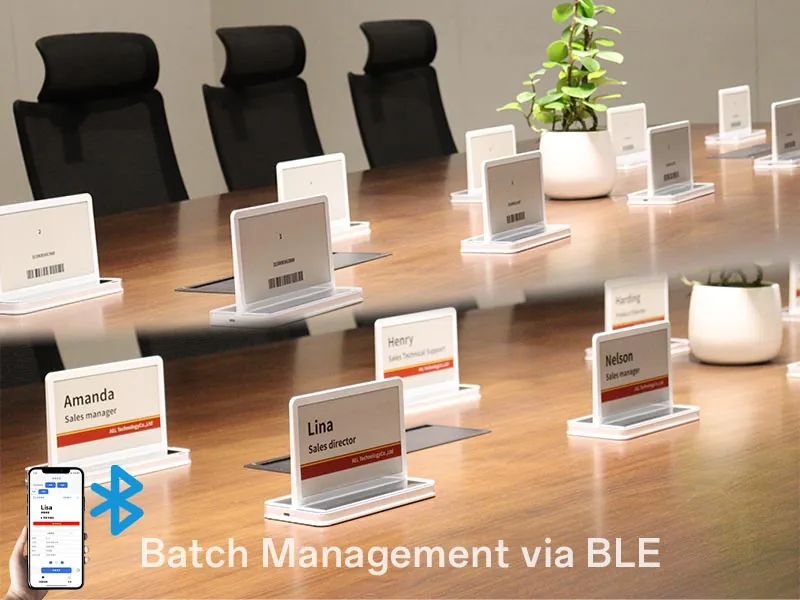
SEEKINK is a leading company in the development of ePaper technology, providing innovative solutions for a variety of display needs. One of our products, the T075E5HD 4-Color E–ink Nameplate with PV, which offers a high-contrast display with four colors, ideal for use in dynamic signage and personalized nameplates.
With a strong focus on energy-efficient, sustainable solutions, SEEKINK continues to push the boundaries of ePaper technology, offering low-power, high-quality displays that meet the growing demands of modern industries.
