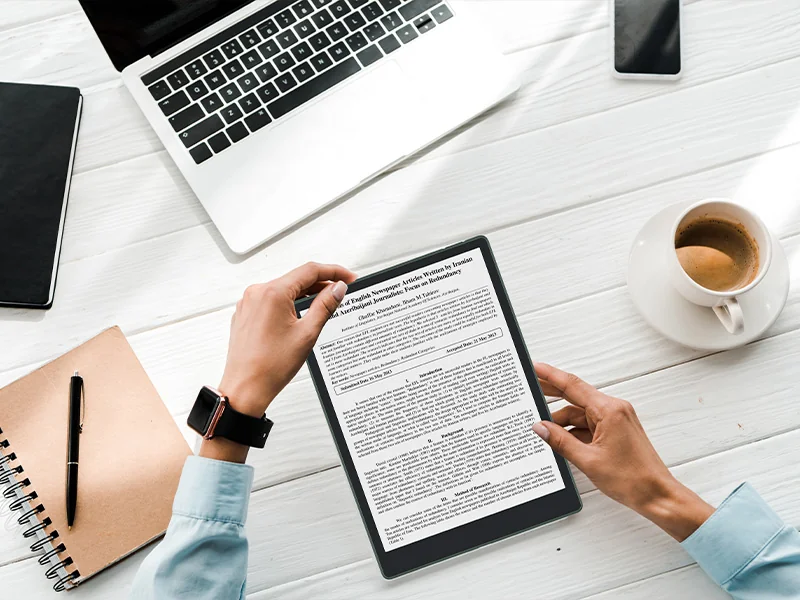
As the world becomes more digitally connected, the demand for technology that closely mimics the tactile and visual experience of paper is growing. This is especially true in the ePaper industry, where advancements are continually made to improve the reading experience and provide a more comfortable, paper-like alternative. One of the critical developments in this space is the Paper Similarity Index (PSI), a scientific standard designed to assess how closely an electronic paper display mirrors the characteristics of traditional paper. In this article, we explore the importance of PSI in enhancing ePaper technology and its impact on the industry.
The Evolution of ePaper Standards
In 2020, E Ink, one of global leader in ePaper technology, partnered with TÜV Rheinland to develop a robust, scientifically-based standard to evaluate the paper-like qualities of electronic displays. After two years of extensive research and testing, this collaboration resulted in the introduction of the Paper Similarity Index (PSI) in 2021. The PSI serves as a critical metric for measuring the comfort and readability of ePaper displays in comparison to traditional paper.
The PSI standard is designed with ergonomic principles in mind, focusing on how well an ePaper display mimics the optical characteristics of paper. As ePaper continues to be adopted for applications such as eReaders, digital signage, and electronic shelf labels, understanding the key factors that affect readability and user comfort is essential. The PSI evaluates various parameters, including contrast, brightness, color consistency, glare resistance, and overall visual comfort.
Key Features of the Paper Similarity Index (PSI)
The PSI evaluates ePaper displays across several critical factors that impact the user’s visual experience:
- Environmental Adaptability: How well the display performs under varying lighting conditions, mimicking the paper’s ability to remain readable in both bright sunlight and dim light.
- Constant Contrast: The consistency of contrast across different viewing angles, ensuring that the text remains clear and easy to read from various positions.
- Anti-Glare and Reflection Resistance: Similar to traditional paper, the ePaper display must reduce glare and resist reflections from ambient light sources, offering a paper-like visual experience.
- Eye Comfort and Health Features: Evaluating the screen’s ability to reduce strain on the eyes during prolonged reading sessions, an essential factor for maintaining comfort during use.
- Color Temperature Consistency: Ensuring that the color temperature of the display remains stable across different lighting conditions, creating a natural and comfortable reading experience.
- Brightness and Uniformity: The ePaper display must maintain uniform brightness levels and color consistency across the screen to replicate the even tone of paper.
The PSI range is from 0-100, with 100 representing the paper’s ideal score. A higher PSI indicates that the ePaper display offers a better paper-like experience. This metric allows manufacturers to track and improve their display technology while offering consumers a clear benchmark for evaluating the reading comfort of different ePaper products.
The Impact of PSI on the ePaper Industry
The PSI has significantly influenced the direction of ePaper technology by providing manufacturers with a quantifiable, standardized way to assess and improve their displays. It has encouraged manufacturers to refine their products to meet higher standards of readability, comfort, and visual performance. This has led to more intuitive, user-friendly ePaper devices that deliver an experience closer to reading from actual paper.
With the PSI, the ePaper industry can continue to evolve, focusing on areas such as contrast consistency, brightness uniformity, and eye comfort, all of which contribute to a more natural reading experience. As the PSI becomes widely adopted, consumers will benefit from clearer, more comfortable ePaper displays, making this technology even more appealing for a variety of applications.
SEEKINK and the Future of ePaper Displays
SEEKINK, a leading innovator in ePaper technology, has embraced the Paper Similarity Index (PSI) as part of our ongoing commitment to improving ePaper display performance. One example of SEEKINK’s cutting-edge products is the H82EPL 8.2-inch ePaper Reader. It provides an exceptional reading experience, with low power consumption and paper-like visual performance.
As the ePaper industry continues to evolve, SEEKINK remains focused on advancing our technology to meet consumer demand for displays that mimic the comfort and readability of traditional paper.
