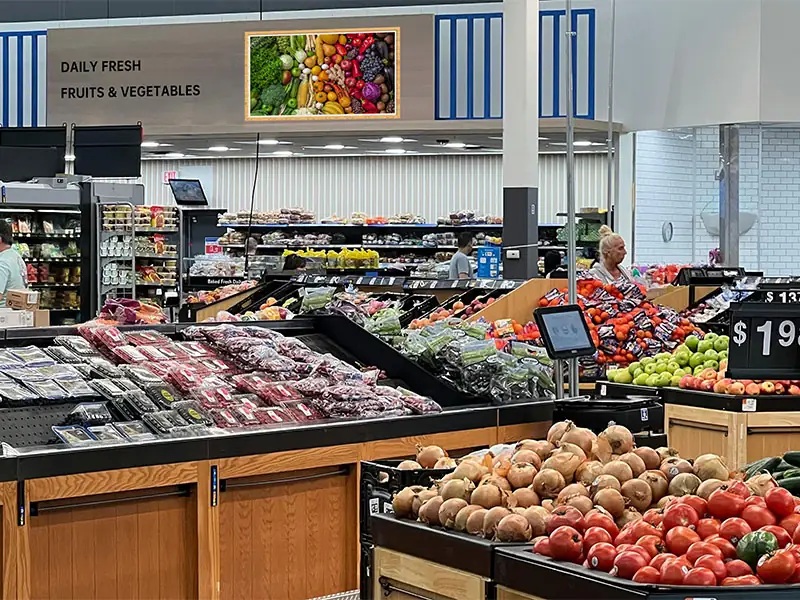
As the retail sector increasingly turns to digital solutions, ePaper technology has emerged as a key innovation, particularly in the form of electronic shelf labels (ESLs). This technology offers retailers a way to modernize their operations, reduce costs, and improve the customer experience. From grocery stores to electronics shops, ePaper is becoming the preferred solution for product labeling and price management. In this article, we explore the rise of ePaper in the retail sector, how it’s being used, and what the future holds for this revolutionary technology.
What Is an ePaper ESL System?
An Electronic Shelf Label (ESL) system consists of three core components: the ePaper tag or ESL device, the base station (or gateway), and a cloud management system. These elements together form an Internet of Things (IoT) architecture that facilitates efficient communication between store devices and central management. ESLs are primarily used to replace traditional paper price tags, offering several advantages that set them apart from their LCD counterparts.
ePaper ESL vs. LCD ESL
While LCD ESLs have been used in retail settings, they are gradually being phased out due to their higher power consumption and the need for complex wiring installations. LCD tags require continuous power to maintain their display, making them less energy-efficient and more expensive to install and maintain.
In contrast, ePaper ESLs offer a static display that doesn’t consume power unless the image changes. These tags use two small coin cell batteries and can last up to 10 years on a single set of batteries. This longevity, combined with the lack of need for external wiring, makes ePaper ESLs ideal for a wide range of retail environments, including supermarkets, convenience stores, electronics shops, and pharmacies.
The Key Advantages of ePaper ESLs
The main advantage of ePaper ESLs lies in their energy efficiency and ease of installation. Here are some additional benefits:
- Low Power Consumption: ePaper technology only consumes energy when the display content changes, which results in a significant reduction in energy costs.
- Long Battery Life: With up to 10 years of battery life, ePaper ESLs are more cost-effective and require less maintenance than LCD tags, which often need battery replacements every few months.
- Simplified Installation: Unlike traditional labels that require wiring and infrastructure changes, ePaper ESLs only need basic wireless connectivity, making them easier to install and update.
Flexibility and Remote Management: ePaper ESLs are easily controlled via a cloud management system, which allows retailers to update prices, promotions, and product information across all locations in real-time.
The Role of Wireless Technology in ePaper ESLs
The wireless communication between the ePaper tags and the base station is essential for their functionality. The communication typically occurs over Bluetooth, 2.4 GHz, or 433 MHz frequency bands, with 2.4 GHz being the most common. The system relies on a microcontroller (MCU) chip that integrates the wireless protocol and drives the ePaper display.
The ePaper ESLs are powered by coin cell batteries, usually the CR2450 model, which provide sufficient power to drive the tag for years. This long battery life allows retailers to focus on updating prices and promotions without worrying about the maintenance of the labeling system.
The Emerging Standard for ePaper ESLs
In 2022, the Bluetooth Special Interest Group (SIG) launched an optimized Bluetooth protocol for ESLs, known as Bluetooth 5.4. This version simplifies the Bluetooth stack while providing improvements specifically for ESL applications, ensuring greater efficiency, scalability, and reliability in communications.
The adoption of this standard has positioned ePaper ESLs for growth, particularly in the new retail sector, where digital price tags are becoming integral to the modern shopping experience. As the demand for smart retail solutions rises, more and more stores are turning to ePaper as the primary means of labeling products.
The Global ePaper ESL Market
The global ePaper ESL market has seen rapid growth, fueled by advancements in wireless communication technology and the increasing need for efficient, cost-effective retail operations. As of 2023, the new retail ePaper ESL market holds a 54% market share, with Europe and North America leading the adoption of this technology.
In 2024, the market is expected to continue expanding, driven by the increasing prevalence of digital retail solutions and the rising popularity of ePaper price tags for their ability to reduce labor costs and improve inventory management. Retailers are particularly attracted to the long lifespan and low energy consumption of ePaper ESLs, which result in lower operational costs over time.
SEEKINK: Leading the Way in ePaper Innovation
As one of the leading innovators in ePaper technology, SEEKINK is making significant strides in the development of high-quality, energy-efficient ePaper OEM service with R&D support for the retail industry. We deliver practical ePaper display solutions with a focus on our shelf-level strategic brand partners’s B2B business based on our ePaper display module (EPD module) manufacturing. With SEEKINK‘s focus on sustainability and efficiency, they are driving the evolution of retail technology, helping businesses reduce costs while improving the customer experience.
