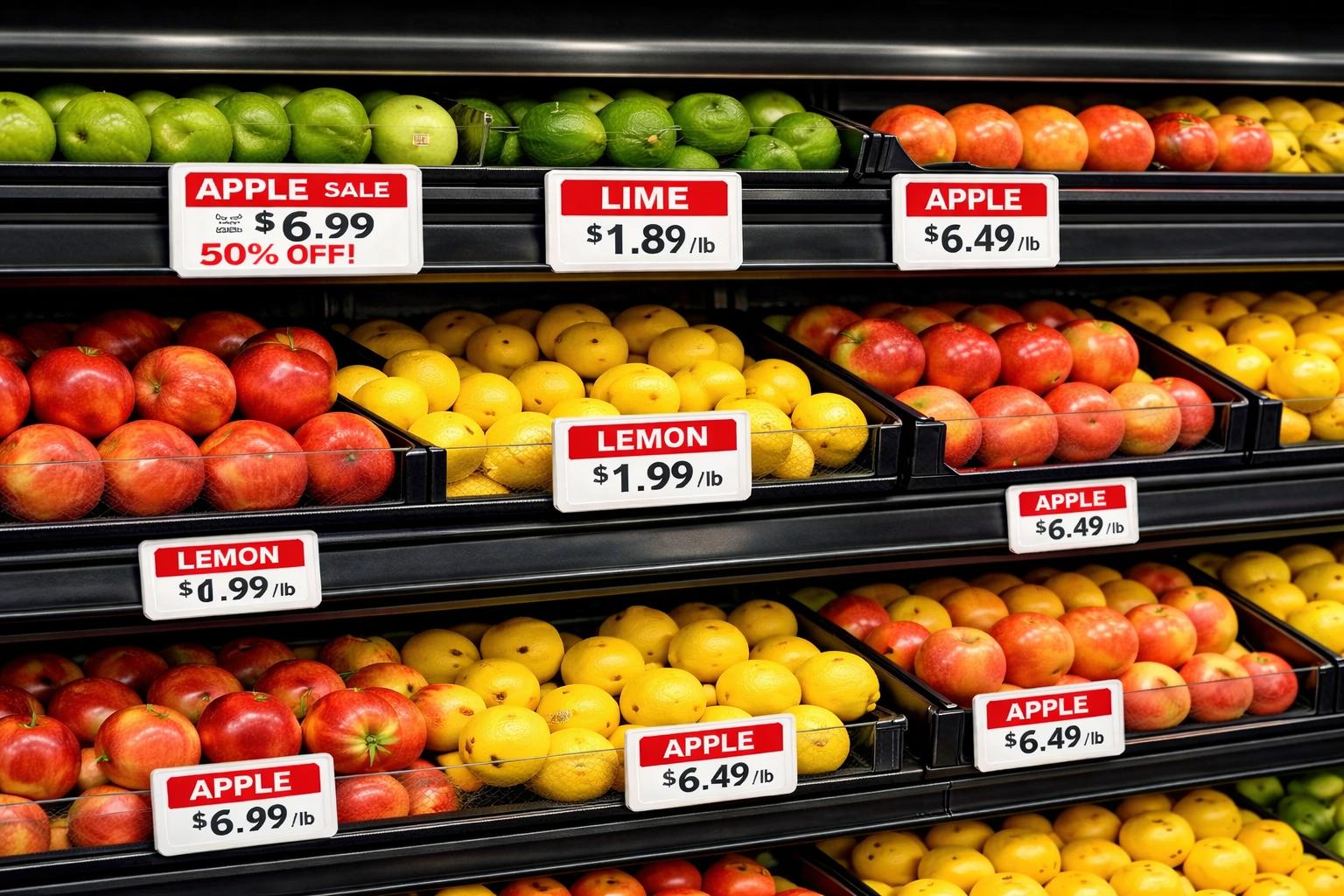
Electronic Shelf Labels (ESLs) have evolved from a niche pricing tool into a global retail standard, reshaping how large chain supermarkets manage pricing, promotions, and in-store information. This transformation has been driven not only by technological progress in Electronic Paper (ePaper) displays, but also by the decisive adoption of ESL systems by industry leaders such as Walmart. Today, ESL deployment has become a strategic indicator of retail digital maturity across regions.
Walmart’s Leadership and Its Global Influence
As one of the world’s most influential retailers, Walmart has played a defining role in accelerating ESL adoption across the global supermarket sector. By implementing ESL systems at scale, Walmart set a benchmark that encouraged other large retail chains to follow.
On June 11, 2024, Greg Cathey, Senior Vice President of Transformation and Innovation at Walmart, announced that electronic shelf labels will be deployed across approximately 2,300 Walmart stores in North America by 2026, covering an estimated 250 million labels. This statement clearly signals that ESLs are no longer experimental tools but core retail infrastructure for large-format supermarkets.
Such large-scale rollouts significantly influence supplier ecosystems, technology standards, and adoption confidence, reinforcing ESLs as an industry-wide solution rather than a regional innovation.
Regional ESL Adoption: Europe Leads, North America Accelerates
From a global perspective, Europe remains the most mature ESL market, characterized by high penetration rates and early adoption. Countries such as France stand out in particular. As the home market of VusionGroup, one of the world’s leading ESL solution providers, France has achieved an ESL penetration rate exceeding 40%, making it the most saturated ESL market globally.
North America, historically slower to adopt ESLs, is now experiencing rapid growth. Walmart’s large-scale deployment plans have acted as a catalyst, pushing ESL adoption beyond pilot projects into nationwide rollouts. This shift reflects increasing pressure on retailers to optimize labor efficiency, pricing accuracy, and omnichannel integration.
Following Europe and North America, Japan and South Korea represent another important ESL region. These markets benefit from high retail automation levels, dense urban store networks, and strong acceptance of digital store technologies.
The Early Development of ESLs in China
China’s ESL journey began with international retail brands introducing ESL systems into their Chinese stores. In 2011, Walmart installed its first ESL system at the Shenzhen Xiangmihu store, initially focusing on departments with frequent price changes such as grains, oils, condiments, food, and beverages. Approximately 5,000 ESL units were deployed in this pilot project.
Following successful operation, Walmart gradually expanded ESL deployment to all its stores across China, demonstrating the system’s reliability and operational value in complex retail environments.
Scaling Up: Domestic Retailers Embrace ESL Systems
China’s large-scale ESL adoption phase officially began at the end of 2012, when Wumart Group started trialing ESL systems in selected Beijing stores. This marked a turning point, as domestic retailers began exploring ESLs not as foreign innovations but as scalable operational tools.
In July 2014, Wumart deployed ESL systems across the fresh food sections of more than 40 stores. This move attracted significant attention within China’s traditional supermarket industry and is widely regarded as the moment when ESL applications in China entered a true scale-up phase.
Following Wumart’s example, more supermarket chains recognized ESLs as a solution to pricing inefficiencies, manual labor costs, and frequent promotional updates.
The Rise of “New Retail” and Digital Store Transformation
In 2016, the introduction of the “New Retail” concept fundamentally reshaped China’s retail landscape. This model emphasized deep integration between online platforms, offline stores, data systems, and logistics networks. As retail digitalization accelerated, ESL systems gained prominence as a closed-loop information system connecting pricing, inventory, and customer interaction.
That same year, internet-native retail players emerged as major ESL adopters. In January 2016, the first Hema Fresh (Freshippo) store opened in Shanghai’s Pudong Jinqiao area, operating as an O2O fresh supermarket. Notably, the store fully adopted electronic shelf labels across all categories, showcasing ESLs as a foundational element of digitally native retail formats.
Since then, ESL adoption has expanded rapidly across China. Today, electronic shelf labels are widely used in supermarkets, hypermarkets, and fresh food retailers, becoming a standard component of modern Chinese retail stores.
Why ESLs Are Now Essential Retail Infrastructure
The widespread adoption of ESLs is driven by clear operational advantages. ESL systems enable real-time price updates, eliminate manual label replacement, reduce pricing errors, and support dynamic promotions. Combined with ePaper display technology, ESLs offer ultra-low power consumption, long service life, and excellent readability under various lighting conditions.
As retailers continue to pursue operational efficiency and digital transformation, ESLs are evolving from pricing tools into multi-functional in-store communication platforms, supporting promotions, product information, and customer engagement.
SEEKINK: Advancing ePaper Display Modules for ESL and Smart Retail Labels
Beyond traditional retail price labels, these ePaper modules are increasingly applicable to warehouse and logistics labeling scenarios, where high update frequency, durability, and maintenance efficiency are essential. Backed by strong EPD module manufacturing capabilities, SEEKINK offers practical ePaper display solutions tailored to the B2B needs of shelf-level strategic brand partners.
