As electronic paper (ePaper) technologies continue to evolve beyond static, text-focused applications, electrowetting ePaper display technology has emerged as a promising route for achieving fast response times, rich color performance, and reflective, low-power displays. By replacing solid electrophoretic particles with controllable microfluidic systems, electrowetting ePaper offers a fundamentally different display mechanism that brings ePaper closer to video-capable and high-resolution visual experiences while maintaining its reflective nature
The Basic Structure of Electrowetting ePaper Displays
An electrowetting ePaper monochrome display module consists of two substrates—an upper substrate and a lower substrate—that together form a sealed cavity. Inside this cavity are two immiscible fluids: a polar liquid and a non-polar liquid. These two liquids do not mix and instead form a stable interface that can be precisely controlled by an electric field.
The lower substrate typically includes a supporting base, a first electrode, a hydrophobic insulating layer (or an insulating layer coated with hydrophobic material), and pixel walls. The upper substrate includes a supporting plate, a second electrode, sealing adhesive, and support column structures. The pixel walls divide the display area into discrete pixel cells, each functioning as an independent microfluidic unit.
A critical design feature is that the hydrophobicity of the pixel wall material is lower than that of the hydrophobic insulating layer. Additionally, the pixel walls have different affinities for polar and non-polar liquids. This selective wettability ensures that the non-polar liquid is confined within each pixel cell and effectively isolated from neighboring pixels.
How Electrowetting Controls Light and Images
Electrowetting ePaper displays operate by controlling the movement of fluids within each pixel cell using an electric field. When no voltage is applied, the non-polar, light-absorbing fluid spreads across the pixel area, blocking reflected light and making the pixel appear dark. When voltage is applied, the wettability of the surface changes, causing the colored oil film to retract and expose the reflective background beneath. This transition makes the pixel appear bright.
This mechanism is known as a pixel-wall-confined two-phase fluid system, where the interface between the polar and non-polar liquids is actively manipulated. By adjusting the electric field strength and timing, the system controls how much of the reflective surface is exposed, enabling precise grayscale control. Unlike electrophoretic displays, grayscale in electrowetting ePaper is achieved through fluid geometry rather than particle mixing.
Ultra-Fast Optical Response and Video Capability
One of the most significant advantages of electrowetting ePaper is its exceptionally fast optical response. The movement of the three-phase contact line—where the fluid, solid surface, and surrounding medium meet—can reach speeds on the order of centimeters per second. As a result, electrowetting display pixels can achieve optical switching times of less than 10 milliseconds.
This response speed is fast enough to support high-frame-rate video playback, a capability that traditional electrophoretic ePaper struggles to achieve. While most ePaper technologies are optimized for static or slowly changing content, electrowetting ePaper opens the door to animated interfaces, smooth transitions, and dynamic visual content, all while retaining reflective display characteristics.
Color Rendering Through Vertical Color Mixing
In electrowetting ePaper, color is achieved by stacking two or three monochrome electrowetting layers and using vertical color mixing. Each layer controls a different absorbing color fluid. By independently driving these layers, the display can produce a wide range of colors.
This approach differs fundamentally from the RGB planar color filter method used in electrophoretic microcapsule ePaper. Because electrowetting uses absorptive color fluids rather than filters, it avoids the light loss associated with filter-based color generation. Theoretically, this enables electrowetting ePaper to achieve over 1.5 times higher reflectivity and up to three times higher resolution compared with color-filter-based electrophoretic ePaper.
The result is brighter colors, sharper details, and improved visual clarity, especially in reflective, ambient-light environments.
Comparing Electrowetting ePaper with Other ePaper Technologies
Electrowetting ePaper occupies a unique position within the broader ePaper ecosystem. Traditional electrophoretic microcapsule and microcup ePaper technologies excel at ultra-low static power consumption and bistable image retention. However, their refresh speeds are limited, especially for color content.
Electrowetting ePaper trades bistability for speed. Maintaining a static image requires power, but because there is no backlight, power consumption remains far lower than that of LCD or OLED displays. This makes electrowetting ePaper a hybrid solution—combining the speed advantages of emissive displays with the energy efficiency and readability of reflective displays.
Compared with total internal reflection (TIR) ePaper, electrowetting offers even faster response and higher theoretical reflectivity, while TIR focuses more on simplified particle systems and manufacturing compatibility with LCD processes.
Manufacturing and Engineering Considerations
Electrowetting ePaper introduces its own engineering challenges. Precise control of fluid stability, sealing reliability, and long-term material compatibility are critical for commercial viability. Pixel wall geometry, surface coatings, and fluid formulations must be carefully optimized to ensure consistent performance over time.
However, advances in microfabrication, materials science, and driving electronics continue to improve yield and durability. As these challenges are addressed, electrowetting ePaper is increasingly viewed as a strong candidate for next-generation reflective display applications that require motion and color.
Ideal Application Scenarios for Electrowetting ePaper
Because of its fast response and superior color potential, electrowetting ePaper is best suited for applications where visual richness and dynamic updates are important, but extreme brightness and emissive displays are not required. Typical scenarios include:
- Commercial and retail digital signage
- Information dashboards and smart panels
- Wall-mounted advertising displays
- Smart IoT terminals requiring low power and smooth visuals
In these use cases, electrowetting ePaper delivers a compelling balance between performance, energy efficiency, and visual comfort.
Electrowetting Technology VS Electrophoretic Display in ePaper Development
As display markets increasingly prioritize sustainability, readability, and real-world efficiency, electrowetting ePaper is often discussed as a forward-looking technology due to its fast refresh rate and video-like performance. However, when compared with electrophoretic ePaper, electrowetting solutions typically require continuous power to maintain images and involve more complex structures, making them less suitable for long-term, low-energy commercial deployments. In contrast, electrophoretic ePaper stands out with its true bi-stable nature, ultra-low power consumption, excellent sunlight readability, and proven reliability—key advantages for sustainable signage and public information displays.
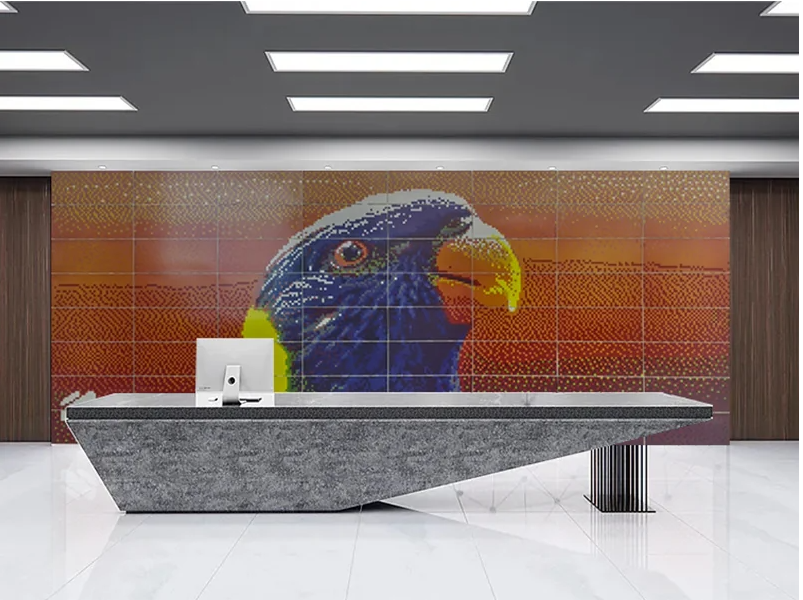
Against this backdrop, SEEKINK focuses on advancing practical and scalable electrophoretic ePaper solutions for commercial and public applications. By continuously exploring advanced ePaper technologies and integrating them with real-world use cases, SEEKINK delivers Full-Color Splicing E ink Prism Wall, which features clear visibility, vivid color presentation, and large size. Through thoughtful technology selection and system integration, SEEKINK helps enterprises deploy next-generation ePaper displays that meet modern visual demands while aligning with sustainability goals.
