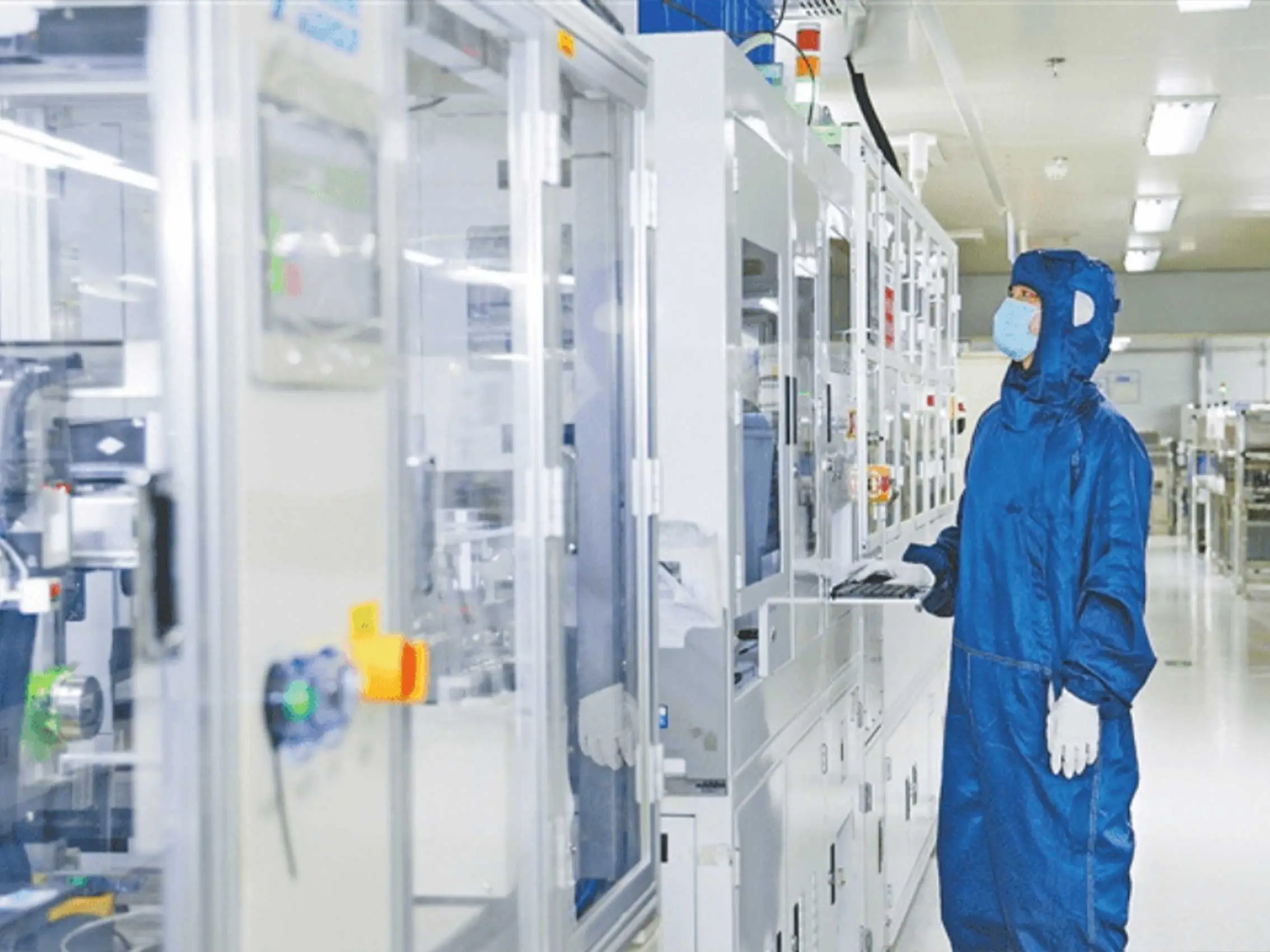
The e-paper display technology has made significant strides over the past decade, thanks in part to advancements in manufacturing processes and the increasing level of automation in production. The process of creating e-paper modules involves a highly specialized combination of material assembly, testing, and continuous innovation. From adhesives to flexible circuits, every component plays a vital role in ensuring the display’s performance, durability, and quality. This article delves into the manufacturing processes that power e-paper technology, the automation involved, and how these developments have transformed the industry.
E-Paper Manufacturing Process Overview
The e-paper display module production involves several intricate steps, with the goal of ensuring the proper assembly and functionality of the e-paper displays. Below is a detailed look at each stage in the e-paper manufacturing process:
The e-paper film (or mother sheet) is the core component of the display. Before it is used in final assembly, it undergoes several tests to ensure its quality. These tests include checking for defects, visual consistency, and responsiveness. After testing, the film is cut into precise sizes based on the required specifications for various applications. The film must be clean and free from contaminants, which is why it undergoes a thorough cleaning process before moving on to the next stage.
The Thin Film Transistor (TFT) backplane serves as the control center for each pixel on the e-paper display. Like the e-paper film, the TFT backplane is cut and cleaned to the desired specifications. The process involves etching circuits on the substrate to control the pixels’ behavior. These circuits are specifically designed to work with e-paper technology, ensuring that each pixel behaves in a way that creates a sharp, clear image while consuming minimal power.
One of the most crucial steps in the manufacturing process is the lamination of the e-paper film onto the TFT backplane. This requires precision and careful handling to ensure that the materials adhere correctly without compromising the integrity of the display. Special adhesives and insulating materials are used to bond the two layers, ensuring their durability and performance. The lamination process is carried out in a cleanroom environment to prevent any dust or contamination from affecting the product.
FPC (Flexible Printed Circuits) are used to connect the e-paper display to the driver chips. These flexible circuits are responsible for delivering the electrical signals to the display, enabling it to change the image or text on the screen. The driver chip is the “brain” behind the e-paper module, responsible for controlling the individual pixels’ behavior. These components are carefully bonded to the TFT backplane using advanced bonding techniques to ensure that the signals are transmitted accurately.
To ensure the e-paper module’s durability, a PS protective film is applied to the e-paper film. This layer serves as a barrier against scratches, dust, and other environmental factors that could damage the display. Additionally, EC (Epoxy Conductive) glue is applied around the edges of the display to enhance the adhesion and provide further protection.
After the assembly of the e-paper display, it undergoes several rounds of testing to ensure the quality of the image display. This includes testing the refresh rate, contrast ratio, and color accuracy. OTP (One-Time Programming) is used to program the display’s settings, ensuring that the e-paper module functions as intended. Additionally, visual inspections are conducted to detect any physical defects or issues with the display.
Evolution of Automation in E-Paper Manufacturing
The e-paper display industry has undergone significant changes in terms of automation. In the early years of production, the manufacturing process was largely manual or semi-automated, which limited output and affected production speed. However, in the last few years, the industry has shifted towards full automation, significantly improving production efficiency, quality control, and consistency.
Before 2014, the production of e-paper modules primarily relied on manual labor, with only some parts of the process being semi-automated. This made the manufacturing process slower and less efficient. The automation of adhesive application, film cutting, and screen testing began to take place around 2017, leading to faster turnaround times and improved consistency in the product.
By 2018, domestic automation equipment had matured, enabling manufacturers to significantly increase their production capacity. The entire manufacturing line was able to produce up to 800-900 units per hour, a vast improvement from previous years. The introduction of features like ACF attachment detection, visual alignment before pressing, and automatic chip loading further streamlined the production process.
Since 2019, the e-paper manufacturing industry has witnessed further innovations in automation. Bonding particle automatic detection and AOI (Automated Optical Inspection) for glue dispensing were introduced to ensure higher quality standards. Additionally, the industry has adopted full automation in OTP programming and screen checking. These advancements have made it possible to inspect the screens for defects with greater accuracy and speed.
One of the most recent innovations in e-paper manufacturing is automatic packaging equipment. This has made the packaging process faster and more efficient, reducing labor costs and minimizing human error. The use of automated packaging systems has made it possible to deliver e-paper modules in optimal condition, ready for use in end products.
SEEKINK: Leading the Way in E-Paper Innovation
The e-paper manufacturing process has evolved significantly over the years, with advancements in automation and manufacturing technologies making the production process faster, more efficient, and more reliable. SEEKINK has embraced these changes and continues to lead the charge with e-ink products. The H82NPL 8.2-inch ePaper Notepad, combines innovative e-paper technology with sleek, user-friendly design. Ideal for professionals, students, and note-takers, this device offers exceptional visual clarity, low power consumption, and long battery life.
