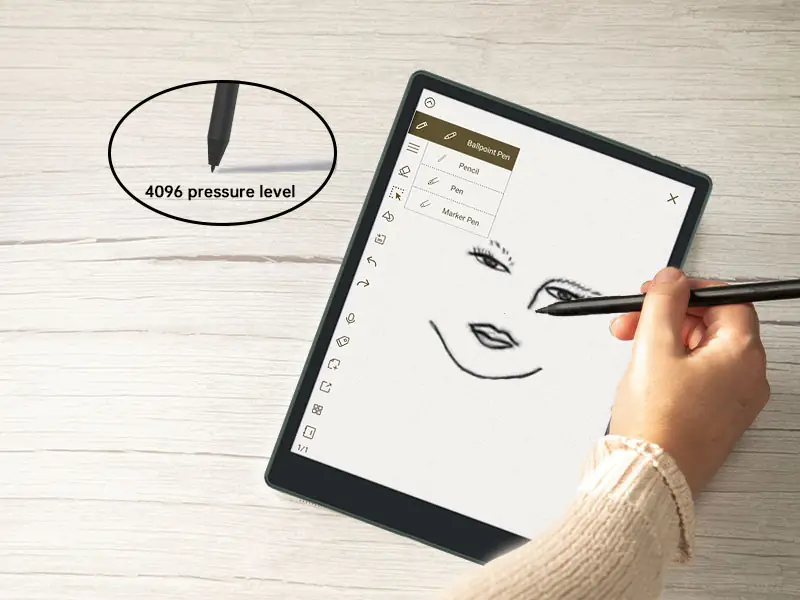
Electronic Paper, commonly known as ePaper, is a reflective display technology that does not emit light. Instead of relying on backlighting, ePaper displays images by reflecting ambient light, allowing them to maintain static content with zero power consumption or only microamp-level energy usage. This unique working principle makes ePaper fundamentally different from traditional LCD or OLED displays and positions it as one of the most energy-efficient display technologies available today.
The Origins of ePaper Display Technology
The concept of ePaper can be traced back to the 1970s, when Nick Sheridon, a researcher at Xerox PARC, first proposed the idea of electronic paper and electronic ink. His early prototype used transparent silicone resin containing tiny polyethylene spheres with opposite electrical charges. Each sphere was white on one side and black on the other. When an electric field was applied, the spheres rotated to display black or white pixels, forming images.
In the 1990s, researchers at the MIT Media Lab refined this concept by replacing solid spheres with transparent microcapsules containing charged pigment particles. This breakthrough solved the problem of pigment aggregation and established the foundation of electrophoretic display technology, which remains the dominant technical route for mainstream ePaper displays today. This technology is often referred to as electrophoretic ePaper or electronic ink displays.
Why ePaper Is Ideal for Reading and Visual Health
One of the primary reasons ePaper technology is widely adopted for reading devices lies in its non-emissive, paper-like nature. Unlike LCD screens, which rely on backlighting, ePaper displays reflect ambient light in the same way as traditional paper. This results in a viewing experience that closely resembles reading printed materials.
Research from institutions such as the Harvard T.H. Chan School of Public Health has shown that the spectral characteristics of LCD backlights—particularly blue and high-intensity light—can place stress on retinal cells. Prolonged exposure may lead to the accumulation of reactive oxygen species, increasing the risk of photochemical retinal damage over time. ePaper displays, by eliminating backlighting and blue light emission, significantly reduce visual strain and are considered a more eye-friendly display solution for long-term use.
ePaper vs. LCD: Different Strengths, Not Direct Competitors
It is important to note that ePaper and LCD technologies are not direct substitutes competing for the same applications. Each excels in different scenarios. LCDs prioritize vibrant color, fast refresh rates, and video performance, making them ideal for multimedia and dynamic content. ePaper, on the other hand, emphasizes static image retention, ultra-low power consumption, and visual comfort.
Once an image is rendered on an ePaper display, it can remain visible without consuming power. This feature enables battery life measured in weeks or months rather than hours or days. As a result, ePaper is especially suitable for applications where content updates are infrequent but visibility and energy efficiency are critical.
Sustainability and the Low-Carbon Advantage of ePaper
Beyond visual comfort, ePaper offers significant environmental benefits. Compared with traditional paper, ePaper displays are reusable, reducing the need for repeated printing and lowering long-term material consumption. Compared with emissive electronic displays, ePaper consumes drastically less electricity over its lifecycle.
This combination of low power consumption, long service life, and digital updatability gives ePaper a strong advantage in supporting low-carbon and sustainable development goals. When integrated with wireless communication and IoT systems, ePaper enables real-time content updates while maintaining minimal energy use.
Key Application Areas of ePaper Technology
Today, ePaper is widely applied in scenarios where replacing traditional paper delivers both environmental and operational benefits. Major application areas include:
- ePaper tablets such as eReaders, digital notebooks, and educational devices
- Electronic shelf labels (ESL) for smart retail
- ePaper waybills and logistics labels
- Meeting room nameplates and smart door signage
- ePaper workbooks and learning tools
- Smart luggage tags
- ePaper bus stop signage and transportation displays
- Large-format ePaper advertising billboards
In these smart IoT terminals, ePaper is often the preferred display technology due to its readability under sunlight, long battery life, and low maintenance requirements.
Major Categories of ePaper Display Technologies
After decades of development, several ePaper display technologies are currently under active research and commercialization. These include:
- Electrophoretic ePaper, the most widely used technology, based on charged pigment particles
- Microcavity (Microcup) ePaper, which uses compartmentalized structures for improved stability
- Total Internal Reflection ePaper, focusing on optical efficiency
- Electrowetting ePaper, enabling faster response and color potential
- Cholesteric Liquid Crystal ePaper, including bistable and ultra-stable liquid crystal routes
- Electrochromic ePaper, which relies on reversible color changes in materials
Although some of these technologies share electronic ink materials, their display structures and operating principles differ significantly, leading to distinct performance characteristics and application niches.
The Future Role of ePaper in Digital Transformation
As industries move toward digitalization, sustainability, and intelligent connectivity, ePaper is increasingly recognized as a strategic display technology rather than a niche alternative. Its ability to bridge the physical world of paper with digital information systems makes it a key enabler for smart retail, smart transportation, education, and office productivity.
SEEKINK is a professional ePaper solution provider dedicated to developing innovative, low-power display products for reading productivity scenarios. The company focuses on combining ePaper’s visual comfort with practical device design. One representative product is the H82NPL 8.2-inch ePaper Notepad, designed for digital handwriting, note-taking, and paper-like reading experiences. By leveraging mature ePaper display technology, SEEKINK delivers eye-friendly, energy-efficient devices that support sustainable digital lifestyles and modern work habits.
