As electronic paper (ePaper) continues to expand from reading devices into outdoor signage, smart transportation, and logistics, different structural approaches to electrophoretic display technology have emerged to meet diverse application needs. Among them, microcapsule-based ePaper and microcup-based ePaper represent two of the most important technical routes. While both rely on electrophoretic particle movement under electric fields, their structural designs lead to distinct performance characteristics in refresh speed, color capability, stability, and environmental adaptability.
Microcapsule ePaper: Speed, Stability, and Wide Temperature Tolerance
Microcapsule-structured ePaper is primarily based on black-and-white electrophoretic particles. Its most notable advantages are fast refresh speed, high stability, and a wide operating temperature range. Under room-temperature conditions, a partial refresh in 2-grayscale mode can reach speeds as fast as 125 milliseconds, making it suitable for applications that require responsive screen updates.
In addition, microcapsule ePaper exhibits excellent environmental robustness. Its operating temperature range can extend from –15°C to 65°C, allowing it to function reliably in both cold and hot outdoor environments. This makes it particularly suitable for use cases such as solar-powered bus stop signage, outdoor ePaper billboards, and logistics labels, where displays must remain legible and stable under harsh conditions.
Although microcapsule ePaper is fundamentally monochrome, color can be introduced by adding color filter layers on top of the black-and-white display. This approach enables up to 4,096 colors, which is sufficient for basic visual differentiation and UI elements. As a result, microcapsule-based color ePaper is commonly used in ePaper tablets, ePaper monitors, and outdoor information displays where fast refresh and temperature tolerance are prioritized over color richness.
Why Microcapsule ePaper Excels in Outdoor and Fast-Refresh Scenarios
The strength of microcapsule ePaper lies in its mature structure and predictable particle behavior. The encapsulated electrophoretic particles are well isolated, reducing interference and ensuring consistent motion under electric fields. Combined with optimized driving waveforms, this structure delivers reliable performance even in low-temperature environments, where other display technologies may struggle.
For public infrastructure and logistics applications, the ability to maintain readability without continuous power consumption is critical. Microcapsule ePaper’s bistable nature allows images to remain visible with near-zero energy usage, aligning perfectly with solar-powered and battery-operated systems.
Microcup ePaper: Designed for Rich and Saturated Color
Microcup ePaper shares the same fundamental electrophoretic principle as microcapsule ePaper: charged particles move under applied electric fields to form images. However, the key difference lies in the display structure. Instead of encapsulating particles in randomly distributed microcapsules, microcup ePaper uses uniform, precisely formed microcups, each acting as an independent cell.
During manufacturing, different quantities and combinations of colored particles are injected into each microcup and then sealed. This structural approach enables the creation of three-color, four-color, five-color, and even full-color ePaper display modules without relying on external color filters.
Compared with color ePaper formed by adding color filter layers to black-and-white microcapsule displays, microcup color ePaper offers higher color saturation, richer hues, and a wider color gamut. This makes it particularly attractive for applications where visual impact and color clarity are important, such as retail signage and information boards.
Structural Advantages of Microcup ePaper
The microcup structure offers several inherent advantages for color display. First, because each microcup is uniform in size and isolated from its neighbors, electrophoretic particles do not mix or interfere across adjacent pixels, eliminating color crosstalk. Second, the microcup structure provides better mechanical stability and structural integrity, improving durability during manufacturing and long-term use.
Additionally, the consistent height and geometry of microcups create a more uniform movement space for charged particles. This makes it easier to precisely control the behavior of three or more different colored particles within a single pixel, which is essential for stable multi-color rendering.
How Three-Color Microcup ePaper Works
A typical example is black–white–red three-color ePaper. In this configuration, black and red particles carry positive charges, while white particles carry a negative charge. Black and white particles are driven using voltages of approximately ±15V, while red particles are driven at a lower voltage, around +5V.
Because red particles are physically larger than black and white particles and require lower driving voltage, their movement speed is slower. As a result, color rendering requires more complex driving waveforms and longer refresh times. Under normal temperature conditions, a full global refresh of a black–white–red ePaper display typically takes 14 to 18 seconds.
Although this refresh speed is slower than monochrome ePaper, it is acceptable for applications where content changes infrequently, such as transportation signage, public notices, and informational displays.
Choosing Between Microcapsule and Microcup ePaper
Microcapsule and microcup ePaper technologies are not competing solutions but complementary ones. Microcapsule ePaper is ideal for fast-refresh, wide-temperature, and outdoor applications, while microcup ePaper excels in color richness and visual appeal. The choice depends on application requirements, including refresh speed, color needs, environmental conditions, and power constraints.
Both technologies share ePaper’s core advantages: reflective display, excellent sunlight readability, ultra-low power consumption, and long-term image stability.
The Role of ePaper in Smart Public and Commercial Displays
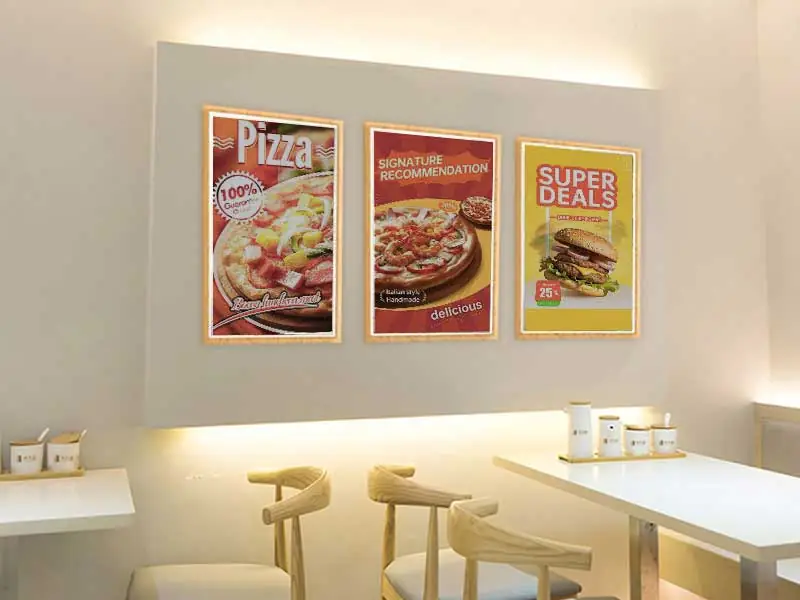
In public buildings, museums, offices, and commercial environments, ePaper displays are increasingly used to deliver energy-efficient, long-lasting, and visually clear information. Whether for wayfinding, event notifications, or large-format information boards, ePaper’s reflective display ensures readability in various lighting conditions while consuming minimal power. Microcapsule ePaper remains ideal where rapid refresh and environmental robustness are required, whereas microcup ePaper excels in delivering rich, saturated colors for applications where visual impact matters. By selecting the appropriate structure, organizations can deploy displays that balance refresh speed, color fidelity, and long-term stability, reducing maintenance costs and environmental impact.
SEEKINK provides advanced ePaper display solutions for commercial and public applications. This solution leverages advanced ePaper technology to deliver high-contrast, vivid visuals while maintaining ultra-low power consumption and long-term durability. By integrating these displays into public and commercial environments, SEEKINK helps partners implement energy-efficient, visually engaging, and sustainable signage that aligns with broader smart building and low-carbon infrastructure goals.
